The track loader vs dozer decision is easy to clarify once the front working tool is defined. A track loader uses loader arms and a bucket to dig into, carry and discharge material. A dozer uses a blade to push, spread and shape material while travelling.
Both use crawler undercarriages in the current LICH range, but that shared feature does not make their work cycles interchangeable.
Track loader bucket vs dozer blade
The track loader bucket can retain material while the machine moves to a discharge point. Loader-arm geometry raises the bucket for dumping. This layout fits loading and short-distance material handling.
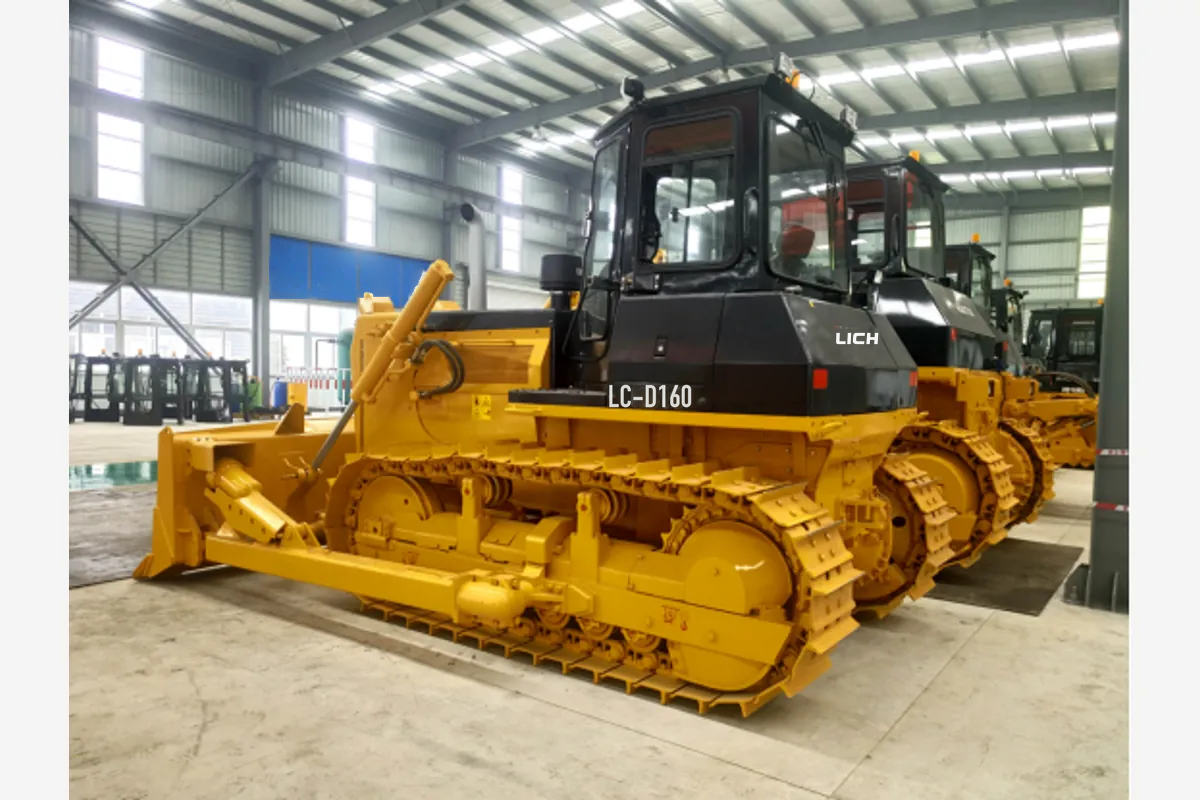
The dozer blade moves material in front of the machine. It fits spreading, clearing and rough grading where the machine remains in a pushing cycle.
| Decision factor | Track loader | Dozer |
|---|---|---|
| Primary tool | Raised loading bucket | Front blade |
| Material movement | Carry and discharge | Push and spread |
| Current LICH example | LC-L300 | LC-D160 / LC-D220 |
| Key data to compare | Bucket, rated capacity, power, loading geometry | Blade, weight, power, undercarriage |
Current model comparison
The LC-L300 track loader publishes 228 kW rated power, a 3.2 m³ standard bucket and a 5.3 m³ coal bucket. Its listed travel speed is 0–11 km/h forward and reverse.
The LC-D220 dozer publishes 23.5 t operating weight, 175 kW rated power and a 3,725 mm blade width. The LC-D160 is in a 131 kW power class.
These specifications should not be ranked as though the machines perform the same job. Start with bucket-versus-blade requirements, then compare models within the correct category.
Choose from the work cycle
- Choose a track loader when material must be gathered in a bucket, carried and dumped.
- Choose a dozer when material must be pushed, spread or roughly graded.
- Check the exact ground, material and transport conditions for either machine.
- Specify the required bucket or blade configuration in the inquiry.
Information to prepare for model matching
A useful machinery inquiry connects the model to a real work requirement. Include the primary task, material, required working range, access limits, ground conditions, attachment needs, quantity and destination. For transport-sensitive equipment, include the maximum permitted shipping dimensions or weight if these are already known.
LICH compares this information with the reviewed product files and published model data. A family name or weight class is not treated as a complete configuration. Values that are not present in the verified product material remain subject to written confirmation, and the final model, working equipment and shipment details should be recorded in the quotation documents.
Frequently asked questions
Can a track loader grade material?
A bucket can perform some surface work, but it is not the same geometry or work cycle as a dozer blade.
Can a dozer load trucks?
A dozer is built around pushing with a blade, not raising and discharging material with loader arms and a bucket.
Which machine is larger?
Size varies by model. Compare exact weights and dimensions after choosing the required working-tool layout.
Compare verified LICH machine data
Use the published model pages to compare dimensions, operating weight, power and working ranges. Final configuration details should be confirmed in writing for the intended job and destination.