A bulldozer vs excavator comparison starts with how each machine moves material. A bulldozer pushes, spreads and rough-grades material with a front blade. An excavator digs below or above ground level and places material with a boom, arm and bucket.
Projects often use both machines because their work is complementary. When only one machine is being shortlisted, the dominant work cycle should decide the category before model power or weight is compared.
Bulldozer vs excavator: core functions
A crawler bulldozer keeps the blade in front of the machine and applies continuous pushing force while travelling. It is suited to spreading fill, clearing, rough grading and moving material over shorter site distances.
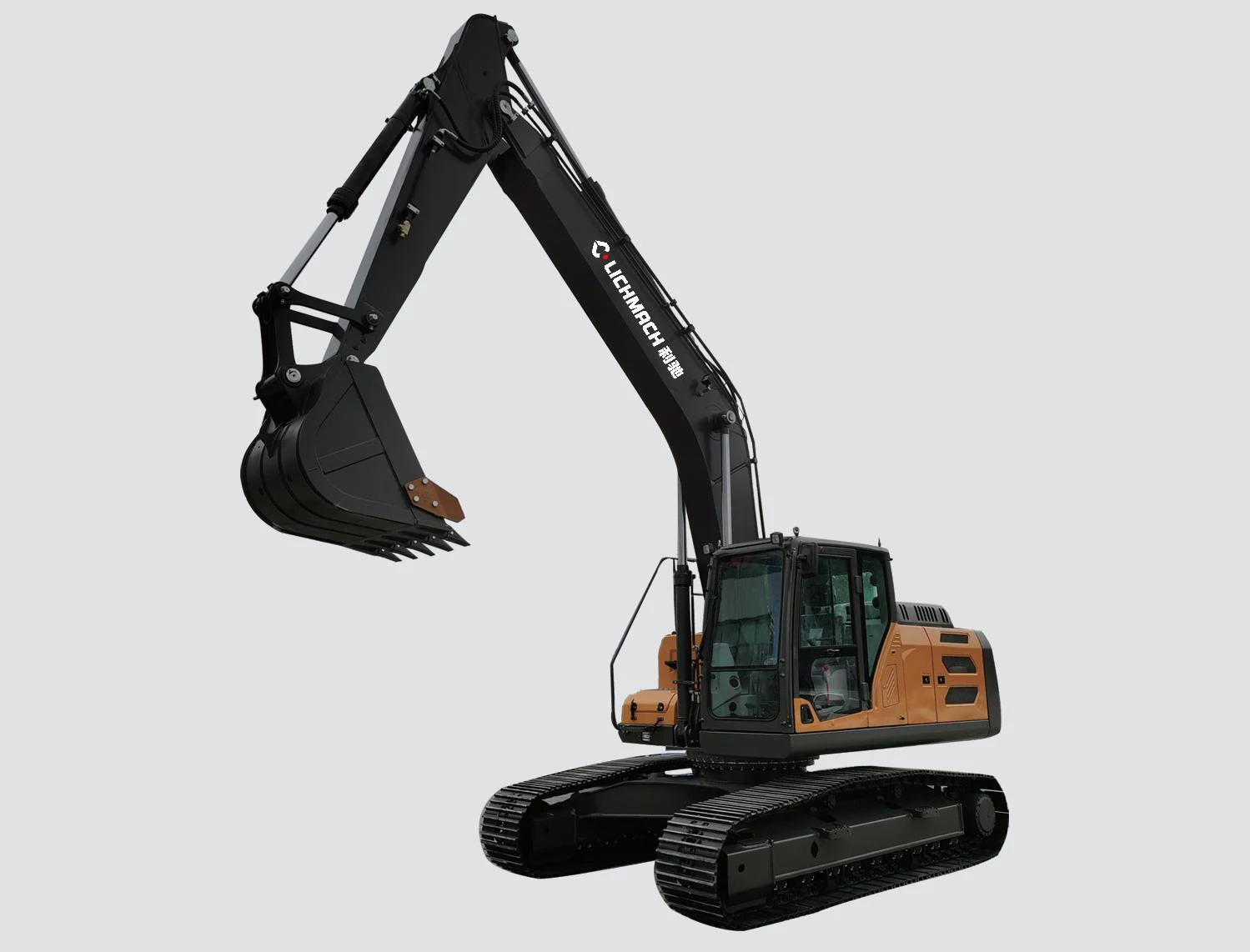
An excavator works from a largely stationary base while the upper structure rotates. It can dig trenches and foundations, shape slopes and load excavated material into another vehicle. Bucket size, digging depth and working range are central excavator specifications.
| Selection question | Bulldozer | Excavator |
|---|---|---|
| Primary tool | Front blade | Boom, arm and bucket |
| Typical movement | Push while travelling | Dig and place through upper-structure rotation |
| Key published data | Power, operating weight, blade dimensions | Operating weight, bucket capacity, digging depth |
| Best fit in a work sequence | Spreading, clearing and rough grading | Excavation, trenching and loading |
Published LICH model data
The LC-D220 crawler bulldozer is listed at 23.5 t with 175 kW rated power at 1,800 rpm and a 3,725 mm blade width. The smaller LC-D160 is published in a 131 kW power class.
The LC8230 crawler excavator is listed at 129 kW rated power at 2,200 rpm, with a 1.1 m³ bucket and a 6,480 mm maximum digging depth. Even where two machines sit in a similar weight class, the working tool and machine geometry remain completely different.
- Select the machine category from the required work cycle.
- Use blade width for dozer planning and digging range for excavator planning.
- Check undercarriage, ground conditions and transport dimensions for the selected model.
Which machine should you choose?
Choose a bulldozer when the main work is pushing, spreading or rough grading. Choose an excavator when the main work is digging, trenching or loading from an excavation face.
If the job contains both work cycles, compare the productivity and scheduling impact of using two dedicated machines rather than asking one machine to perform outside its primary layout.
Information to prepare for model matching
A useful machinery inquiry connects the model to a real work requirement. Include the primary task, material, required working range, access limits, ground conditions, attachment needs, quantity and destination. For transport-sensitive equipment, include the maximum permitted shipping dimensions or weight if these are already known.
LICH compares this information with the reviewed product files and published model data. A family name or weight class is not treated as a complete configuration. Values that are not present in the verified product material remain subject to written confirmation, and the final model, working equipment and shipment details should be recorded in the quotation documents.
Frequently asked questions
Can a bulldozer dig like an excavator?
A bulldozer can cut and push material with its blade, but it does not have the excavator’s boom, arm, bucket and rotating digging layout.
Is an excavator heavier than a bulldozer?
Not as a general rule. Both categories cover multiple weight classes, so compare the exact models.
Which specification matters most?
For a bulldozer, start with blade and power requirements. For an excavator, start with digging depth, reach, bucket capacity and operating weight.
Compare verified LICH machine data
Use the published model pages to compare dimensions, operating weight, power and working ranges. Final configuration details should be confirmed in writing for the intended job and destination.