A wheeled excavator deserves consideration when your work involves firm surfaces and frequent moves between nearby work areas. A tracked machine may be a better starting point for other ground conditions. The decision depends on the complete working route, not the appearance of the undercarriage.
This wheeled excavator guide turns that comparison into a purchasing checklist. Record the ground, travel requirements, digging envelope, support arrangement, and attachments before comparing individual models.
Where a Wheeled Excavator Can Fit
Consider a wheeled excavator for work spread across a prepared site or a series of nearby road maintenance areas. Moving between positions can be a significant part of the working day. Record how often the machine relocates and how the route will be managed.
A wheeled excavator may reduce some transport movements in suitable circumstances, but that benefit needs a route specific assessment. Do not assume road access, permitted travel, or travel speed from the equipment category alone.
Example Site Comparison
Imagine a contractor maintaining several drainage points along an existing paved road. Prepare a route sketch marking each work position, the available setup area, and any soft shoulder. Record the excavation depth and where material will be loaded. Ask suppliers to review the same sketch and explain the proposed setup at each position. Separately, ask the transport provider how the machine will reach the project and leave it. This prevents local mobility from being confused with the complete delivery plan. If one position has different ground conditions, keep it visible as a separate requirement instead of averaging the whole route into a single description. This also helps the operator identify questions that need clarification before equipment arrives at the site.
Compare Wheeled Excavator Ground Requirements
For a wheeled excavator, inspect both the travel surface and the actual working position. Firm pavement at the entrance does not establish adequate support beside an excavation. Describe soft shoulders, slopes, restricted areas, and any surface protection requirements in your inquiry.
A tracked alternative should enter your wheeled excavator comparison when the route and work area include conditions better suited to that undercarriage. Ask for model specific guidance. Neither tires nor tracks remove the need to assess ground support and operating limits.
| Question | Wheeled machine review | Tracked machine review |
|---|---|---|
| Where will it move? | Tires, route, clearances, travel conditions | Track arrangement, route and transport plan |
| Where will it work? | Ground support and stabilizer arrangement | Ground support and track configuration |
| What must it reach? | Working range and approved setup | Working range and approved setup |
| How is it transported? | Shipping dimensions and configuration | Shipping dimensions and configuration |
Check the Wheeled Excavator Working Setup
A wheeled excavator quotation should identify the fitted blade, stabilizers, and axle features where applicable. Request the operating documentation and capacity information for the intended setup. Do not transfer a chart from a similar looking model.
When a wheeled excavator will handle loads, tell the supplier the intended task and ask for the applicable ratings and instructions. Bucket capacity and engine power cannot substitute for approved lifting information.
A Wheeled Excavator Catalogue Example
LICH lists the LC9080 wheeled excavator with a YCF3065-T480 engine, rated power of 48 kW at 2,200 rpm, a 0.3 cubic metre bucket, and a maximum digging depth of 3,765 mm. Confirm the offered configuration before using those figures in a purchasing decision.
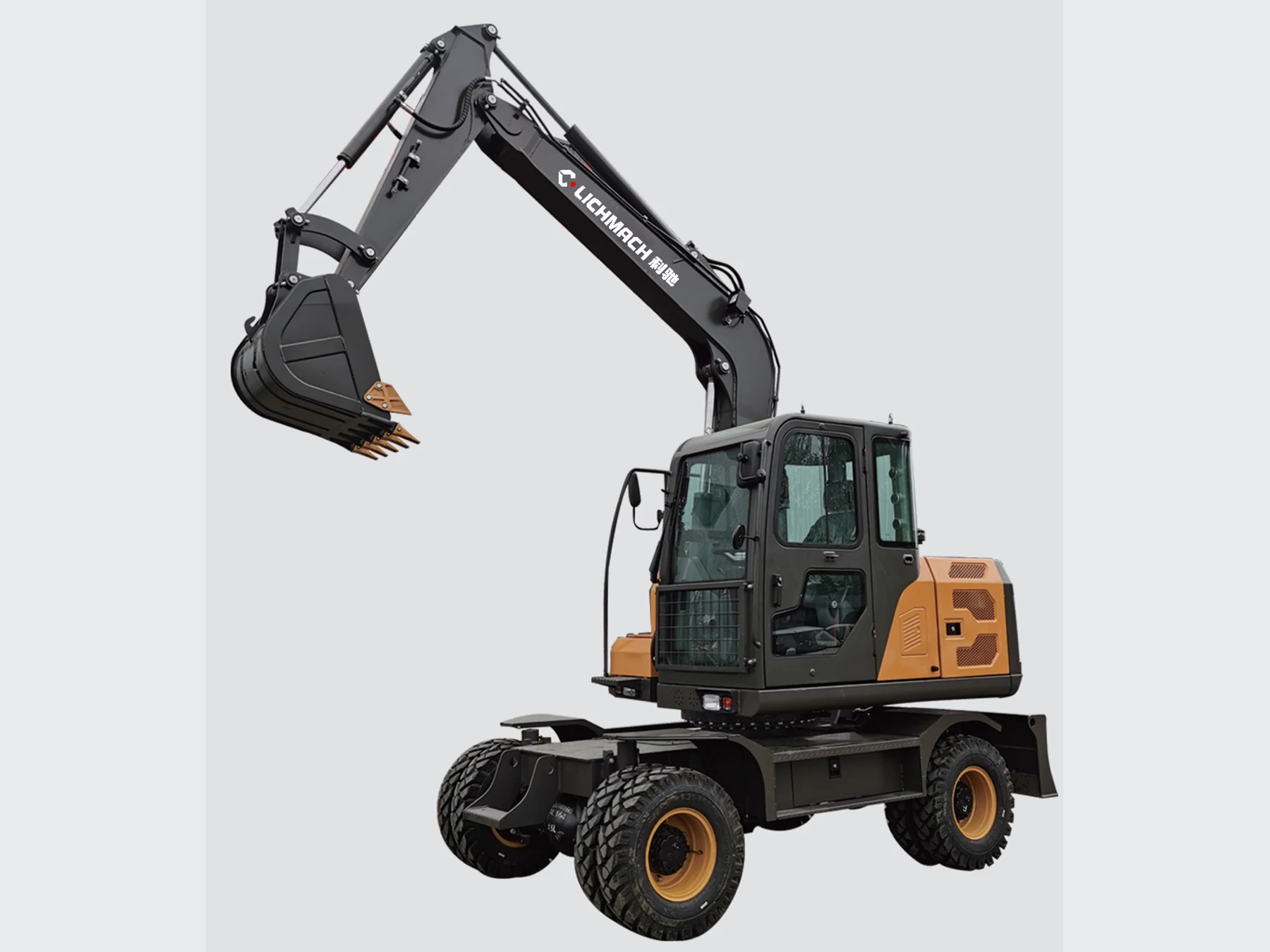
The LC9080 product page is a starting point for a wheeled excavator discussion. Compare the working range with your excavation and unloading positions. Ask for any dimensions or configuration details that are missing from your decision sheet.
Evaluate Wheeled Excavator Attachments and Maintenance
Choose wheeled excavator attachments with the same care as the carrier. Identify the coupler, tool weight, hydraulic requirements, and intended work. A bucket shown in a catalogue does not confirm that every requested tool is available or compatible.
For wheeled excavator maintenance planning, ask how tires, hydraulic components, filters, and service documents are identified. Obtain the machine serial information and component details needed for future support requests.
A wheeled excavator budget should also include transport preparation and the confirmed support arrangement. Compare offers with equivalent equipment rather than treating a lower headline price as a complete cost comparison.
Wheeled Excavator Buyer Questions
Is a wheeled excavator always faster for the project?
No. A wheeled excavator may suit frequent relocations, but total productivity also depends on the working setup, digging requirements, route restrictions, and operator workflow. Describe the entire job before choosing the undercarriage.
Can a wheeled excavator replace a tracked machine?
A wheeled excavator can cover some similar tasks, but substitution needs a ground and performance assessment. Compare the exact machines and operating requirements rather than making a category wide assumption.
What should a wheeled excavator quote include?
A wheeled excavator quote should specify the carrier, fitted equipment, attachments, documents, packing, destination, and written commercial terms. Ask the supplier to resolve unclear details before you compare the final offers.
Request a wheeled excavator model review with site photographs, working dimensions, relocation needs, and your delivery destination.