Understand Motor Grader Blade Controls
A motor grader blade, or moldboard, is the central shaping tool for road construction and maintenance. Its working result depends on angle, pitch, side shift, cutting edge, material, and operator control.
Before comparing a motor grader blade specification, describe the intended work: spreading aggregate, cutting a ditch, maintaining a crown, or trimming a finished surface. Each task changes setup priorities.
Match Settings to Road Work
A motor grader blade angle changes how material flows along the moldboard. A suitable angle can help form a windrow, while poor adjustment may spill material or leave unwanted ridges.
Pitch is another motor grader blade control. Its effect varies with material and cutting edge condition; operators should use the manufacturer’s controls and established site procedure instead of a universal setting.
Side shift positions the motor grader blade relative to the machine. Check the available movement and working range for the quoted model, especially where shoulders, curbs, or tight ditches limit access.
Circle rotation expands motor grader blade positioning, but published movement does not mean every extreme position is suitable for every cut. Verify clearance and operating guidance in the model manual.
| Decision point | Evidence to request |
|---|---|
| Road task | Material and final cross-section |
| Controls | Angle, pitch, side shift |
| Wear parts | Edge pattern and part reference |
Motor Grader Blade and the LC-G170
For a new road base, the motor grader blade must manage material movement and final shape. State the lift thickness, material size, expected crossfall, and target finish before discussing blade adjustments.
For ditching, motor grader blade reach and shoulder access matter alongside stability and visibility. Provide a cross-section drawing and confirm the proposed grader can work within the available corridor.
For maintenance, the motor grader blade condition can matter as much as nominal machine power. A worn edge or loose mounting may degrade the result and increase time spent on rework.
Do not treat one motor grader blade length as a complete productivity measure. Working width changes with angle, and conditions such as material and operator speed affect the number of passes.
When evaluating a motor grader blade, compare control availability, edge type, and the maintenance access needed for replacement. Confirm which features are standard on the actual quotation.
Inspect Cutting Edges
The LICH LC-G170 listing gives a 3,658 by 580 mm moldboard for a motor grader blade discussion. Check the current data sheet and written configuration before relying on dimensions.
The published maximum grading depth is the reach of the blade. How much material comes off in one pass depends on material hardness, blade angle, traction and site conditions, so plan the cut in layers.
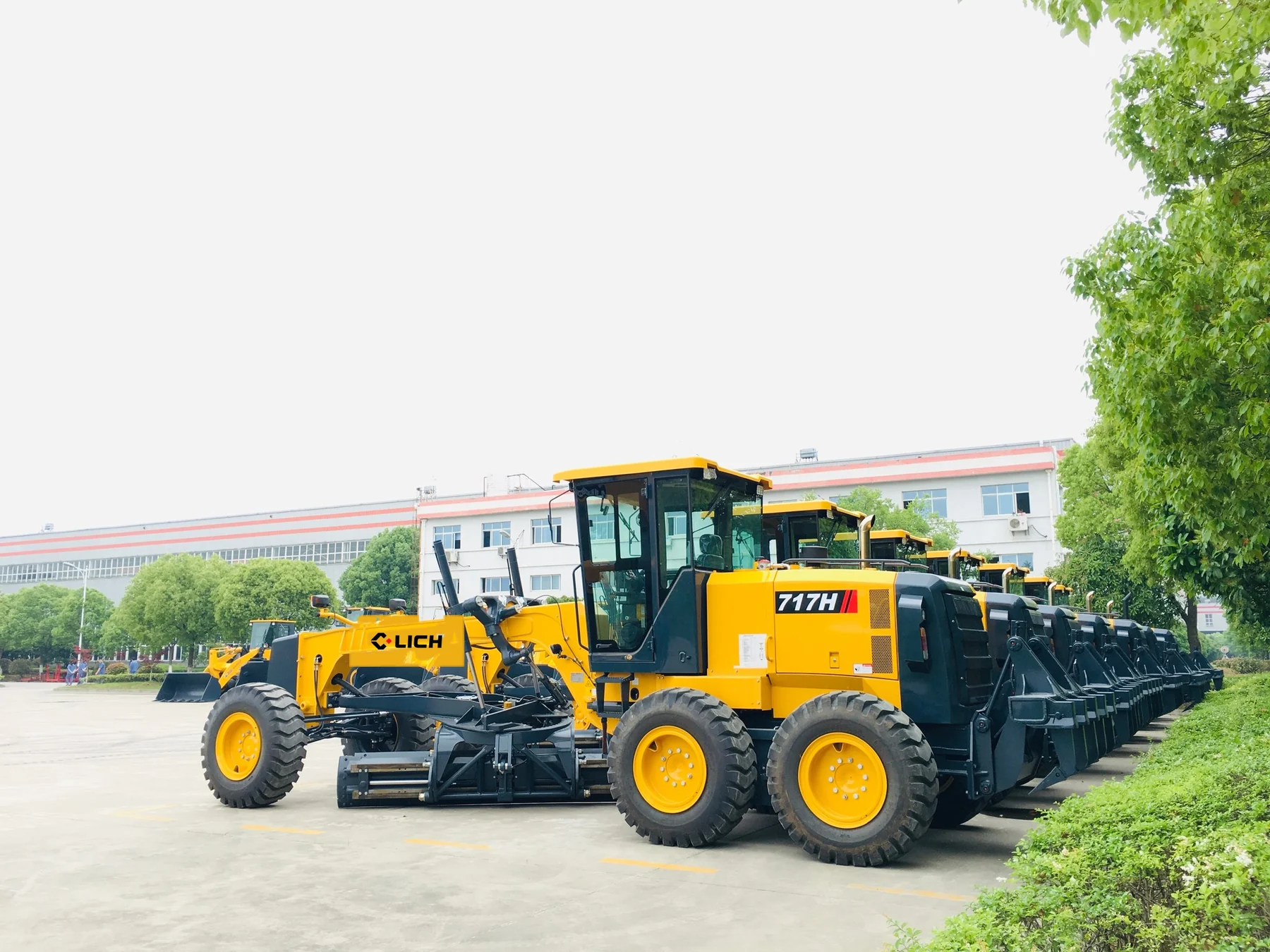
Use a catalogue image of the motor grader blade to identify the part visually, then request a dimensioned drawing. Photos do not establish edge hole spacing, bolt pattern, or replacement compatibility.
A motor grader blade quotation should separate the moldboard assembly from consumable cutting edges. Ask which wear pieces, fasteners, and end bits are supplied with the machine.
Specify the Exact Configuration
Inspect motor grader blade cutting edges for uneven wear, cracks, and loose hardware under the applicable maintenance procedure. Replace or rotate wear parts only as approved for that configuration.
If ordering motor grader blade wear pieces, identify the model, serial, edge dimensions, mounting pattern, and part number. The LICH parts route can review model-matched requests.
For road work, record required crown or cross-slope and the acceptance method. That context makes a motor grader blade discussion more useful than asking for a generic road-grader price.
Add transport width, weight, destination, and maintenance support to the motor grader blade purchasing sheet. Confirm whether any optional control or edge package changes the quoted price or shipment.
Practical buyer worksheet
Give the supplier a road cross-section, target crown or crossfall, material description, expected cutting depth, and the available shoulder width. Identify whether the main task is new construction, surface restoration, or routine maintenance. Record the required edge shape, part number if known, and bolt pattern from an existing machine. Ask which controls, wear parts, and service documents are included in the actual offer. The operator should review visibility and clearance at the intended working position before the configuration is accepted. A dimensioned attachment drawing is more useful for compatibility than a polished catalogue photograph. For maintenance planning, ask how often the edge is inspected and what tools are needed for replacement. Confirm safe support and lockout steps from the manual. Keep a record of edge changes so uneven wear can be discussed with the operator and supplier.
Motor Grader Blade: Buyer Questions
Does a longer motor grader blade guarantee faster finishing? No. Effective working width, material behavior, machine setup, and the required tolerance determine how many passes are useful.
Can any cutting edge fit a motor grader blade? No. Verify mounting dimensions and the exact part reference; visually similar holes and curved profiles are not proof of interchangeability.
For a motor grader blade review, send LICH the grader model, intended road section, material, required finish, edge reference, quantity, and destination through the contact page.