A mini excavator is a compact excavator designed to deliver the digging layout of a crawler excavator in a smaller operating-weight and working-space envelope. It still uses a boom, arm, bucket, rotating upper structure and tracked undercarriage, but the dimensions make access a central selection factor.
The category covers more than one machine size. In the current LICH range, compact models run from the 1.5 t class LC-E15 to the LC8035 compact crawler excavator, with different bucket capacities and digging depths.
What is a mini excavator used for?
Mini excavators are selected for excavation and material-placement work where a full-size excavator may be unnecessarily large or cannot access the work area. Typical tasks include trenching, foundation preparation, landscaping and site work around existing structures.
The exact application depends on digging depth, bucket capacity, available attachments and site conditions. “Mini” should not be treated as a promise that every model fits every confined space.
- Restricted-access excavation
- Utility and drainage trenches
- Landscape and property work
- Small foundation and site-preparation tasks
- Attachment-based work where the approved hydraulic configuration is available
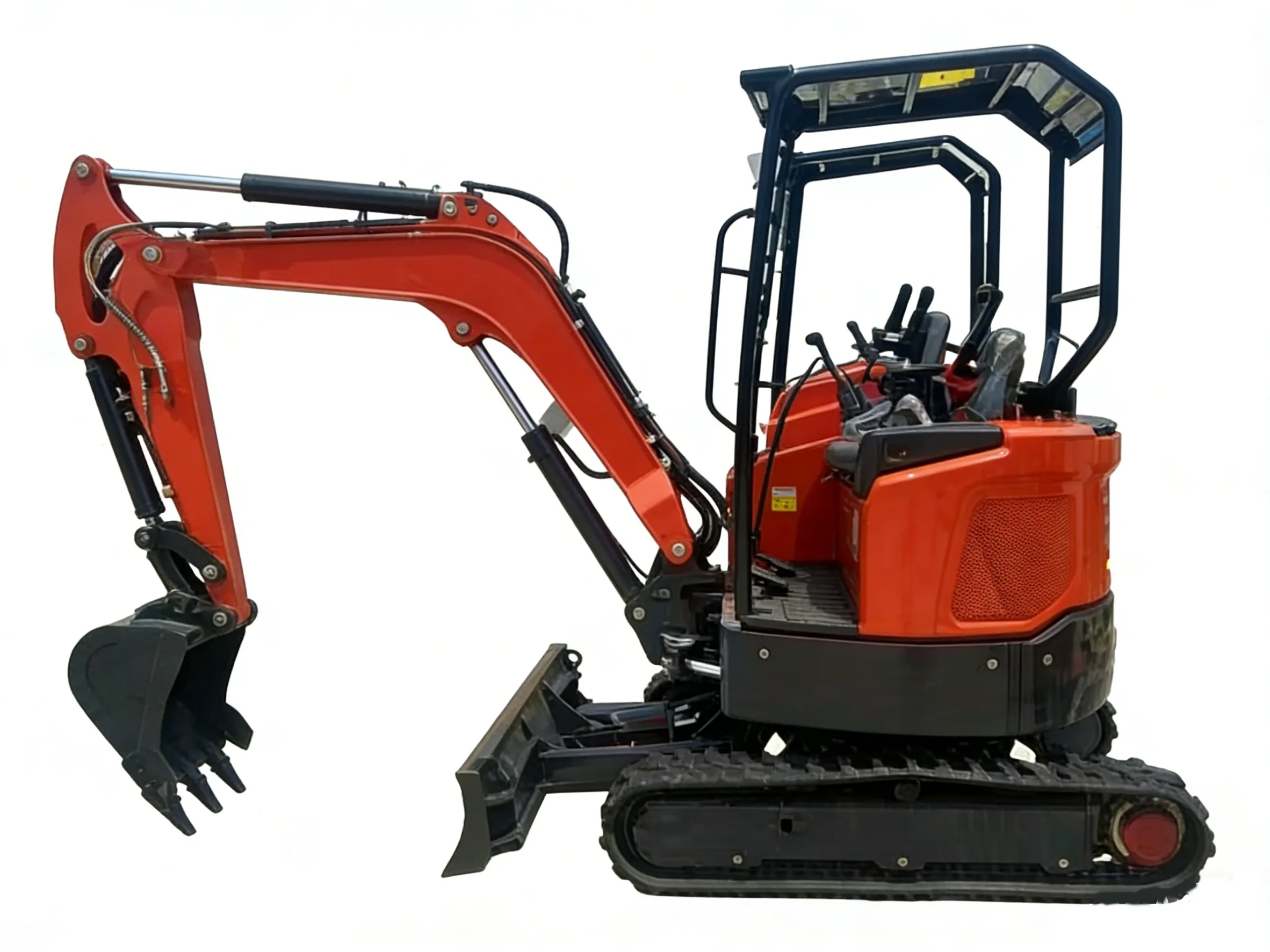
Mini excavator sizes in the current LICH range
The LC-E20 is listed at 2,000 kg with a 0.04 m³ bucket and 2,060 mm maximum digging depth. The LC-E30 is listed at 2,800 kg with a 0.07 m³ bucket and 2,450 mm maximum digging depth.
At the upper end of the current compact range, the LC8035 is listed with a 0.12 m³ bucket and 3,208 mm maximum digging depth; its operating weight is not published. The figures show that compact excavators should be compared as individual models.
| Model | Operating weight | Bucket capacity | Maximum digging depth |
|---|---|---|---|
| LC-E15 | 1.5 t class | Not published | Not published |
| LC-E17 | 1.8 t class | Not published | Not published |
| LC-E20 | 2,000 kg | 0.04 m³ | 2,060 mm |
| LC-E30 | 2,800 kg | 0.07 m³ | 2,450 mm |
| LC8035 | Not published | 0.12 m³ | 3,208 mm |
Five mini excavator selection factors
Use the mini excavator comparison page to shortlist models from published data. Ask for missing configuration values rather than estimating them.
- Measure access width, height and available swing area.
- Define maximum required digging depth and reach.
- Match bucket capacity and attachment needs to the work.
- Confirm operating and transport weight for the final configuration.
- Review ground conditions, undercarriage and travel requirements.
Information to prepare for model matching
A useful machinery inquiry connects the model to a real work requirement. Include the primary task, material, required working range, access limits, ground conditions, attachment needs, quantity and destination. For transport-sensitive equipment, include the maximum permitted shipping dimensions or weight if these are already known.
LICH compares this information with the reviewed product files and published model data. A family name or weight class is not treated as a complete configuration. Values that are not present in the verified product material remain subject to written confirmation, and the final model, working equipment and shipment details should be recorded in the quotation documents.
Frequently asked questions
What makes an excavator a mini excavator?
It combines an excavator’s digging layout with a compact operating-weight and dimension envelope. Exact category boundaries vary, so compare model data.
Can a mini excavator use attachments?
Attachment availability depends on the model, hydraulic configuration and approved working equipment. Confirm the exact combination before ordering.
What is the smallest current LICH mini excavator?
The smallest current model is the 1.5 t class LC-E15; its published shipping gross weight is 1,200 kg.
Compare verified LICH machine data
Use the published model pages to compare dimensions, operating weight, power and working ranges. Final configuration details should be confirmed in writing for the intended job and destination.