A track loader is a loading machine that combines front loader arms and a bucket with a crawler undercarriage. The bucket handles material at the front of the machine, while the tracks support movement and traction on the working surface.
It should not be confused with a wheeled loader or a bulldozer. The track loader’s front bucket is intended for loading, carrying over site distances and digging into material, while a bulldozer centers its work on a blade.
Track loader layout and main components
Bucket type and optional equipment must match the material and job. Final configuration should be confirmed rather than assumed from the base model.
- Loader arms and bucket: raise, carry and discharge material.
- Crawler undercarriage: provides the tracked carrier layout.
- Powertrain and hydraulics: operate travel and working equipment.
- Operator station: controls travel, bucket and loader-arm movement.
- Service compartments: provide access to maintenance points shown on the model page.
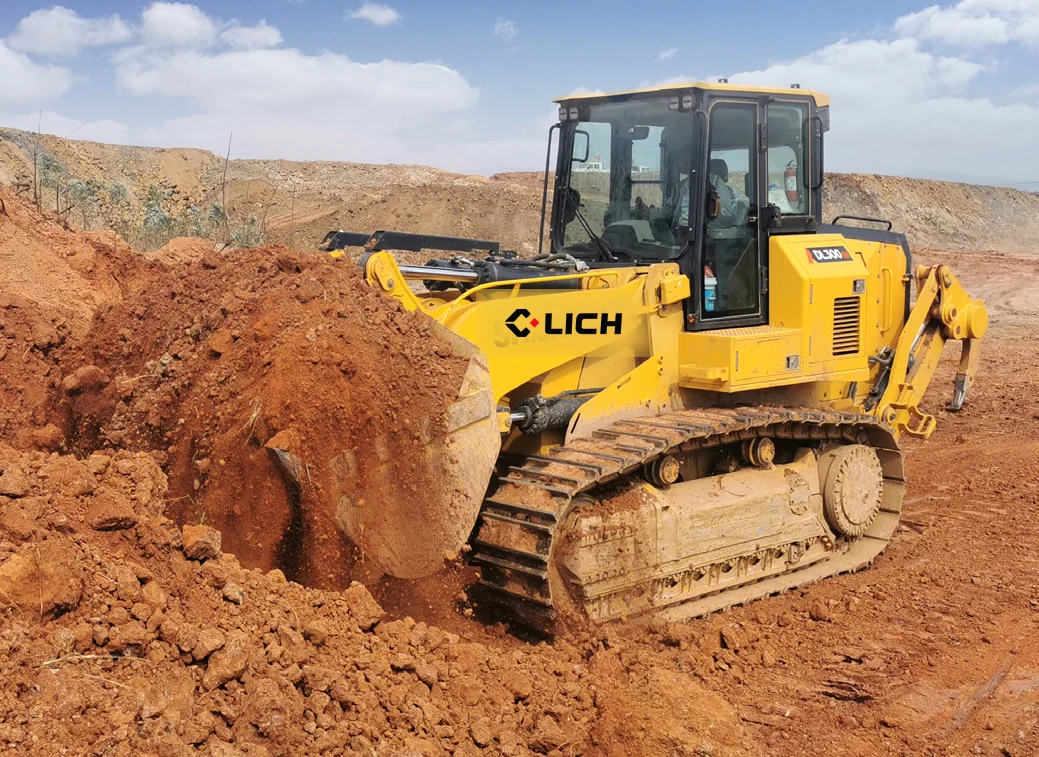
LC-L300 track loader specifications
The current LC-L300 track loader page publishes 228 kW rated power at 1,900 rpm, a 3.2 m³ standard bucket, a 5.3 m³ coal bucket and 0–11 km/h forward and reverse travel speed.
These figures identify the machine class and working envelope. Bucket configuration, operating weight and transport data should still be confirmed for the exact order.
| Specification | Published LC-L300 value |
|---|---|
| Rated power | 228 kW / 1,900 rpm |
| Standard bucket capacity | 3.2 m³ |
| Coal bucket capacity | 5.3 m³ |
| Travel speed | 0–11 km/h forward / reverse |
| Digging depth | 95 mm |
When to consider a track loader
Consider a track loader when the job requires a front loading bucket and a crawler carrier. Review the material, required bucket, ground conditions, loading height, work distance and transport limits.
If the main requirement is pushing and rough grading with a blade, compare a bulldozer instead. If the main requirement is below-ground excavation, compare an excavator or backhoe loader.
Information to prepare for model matching
A useful machinery inquiry connects the model to a real work requirement. Include the primary task, material, required working range, access limits, ground conditions, attachment needs, quantity and destination. For transport-sensitive equipment, include the maximum permitted shipping dimensions or weight if these are already known.
LICH compares this information with the reviewed product files and published model data. A family name or weight class is not treated as a complete configuration. Values that are not present in the verified product material remain subject to written confirmation, and the final model, working equipment and shipment details should be recorded in the quotation documents.
Frequently asked questions
Is a track loader the same as a bulldozer?
No. A track loader uses loader arms and a bucket; a bulldozer uses a blade as its primary working tool.
Is a track loader the same as a skid-steer loader?
No. Machine layouts and size classes differ. Compare the exact product specification rather than treating the terms as interchangeable.
What track loader does LICH currently publish?
The current public range includes the LC-L300 crawler track loader.
Compare verified LICH machine data
Use the published model pages to compare dimensions, operating weight, power and working ranges. Final configuration details should be confirmed in writing for the intended job and destination.