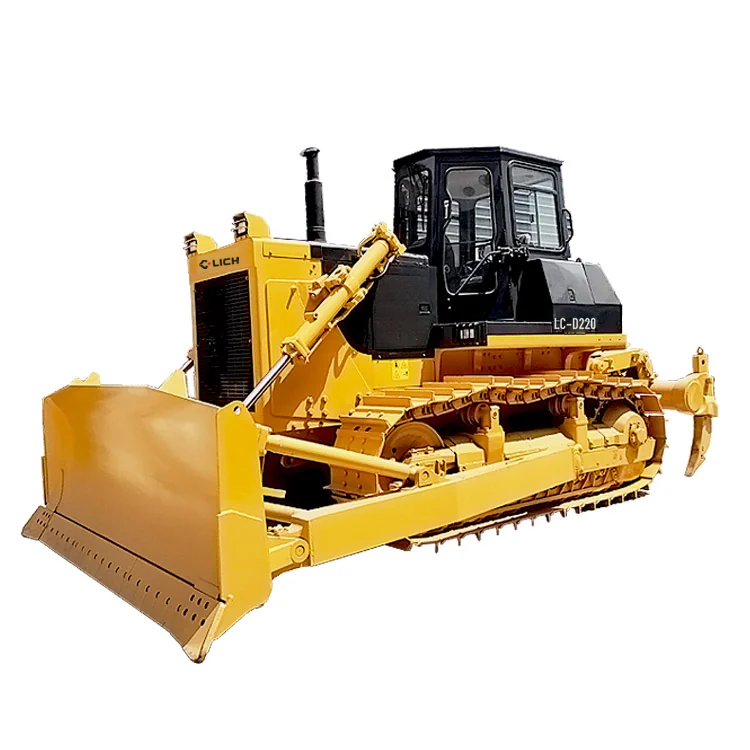
A bulldozer is a construction machine that uses a front-mounted blade to cut, push, spread and roughly shape material while the machine travels. Crawler bulldozers use tracked undercarriages to support traction and distribute the machine load over the ground.
The bulldozer’s value comes from sustained pushing and controlled blade work. It should be selected from the material, push distance, grading requirement, ground conditions and blade configuration—not from engine power alone.
Main bulldozer components and their roles
Optional equipment and blade arrangements vary by configuration. The final quotation should identify the exact working equipment rather than relying on a generic model name.
- Blade: the primary working tool for cutting, carrying, spreading and grading material.
- Tracked undercarriage: supports machine movement and traction on the working surface.
- Powertrain: delivers power to the tracks and hydraulic systems.
- Hydraulic controls: position the blade according to the installed configuration.
- Operator station: provides visibility and machine-control access.
What is a bulldozer used for?
Bulldozers are used for site clearing, spreading fill, rough grading, stockpile work and pushing material over site distances. The exact suitability depends on the blade, material and ground conditions.
They often work in sequence with excavators, loaders, graders and rollers. A dozer can spread material, a grader can refine the surface shape and a roller can compact the prepared layer.
Current LICH crawler bulldozer models
The LC-D160 is published in a 131 kW power class. The LC-D220 is listed at 23.5 t with 175 kW rated power at 1,800 rpm and a 3,725 mm blade width.
These values describe different model classes but do not by themselves define site productivity. Blade configuration, material, slope, push distance and ground conditions still have to be reviewed.
| Model | Published weight | Published power | Published blade data |
|---|---|---|---|
| LC-D160 | Confirm by configuration | 131 kW power class | See model page |
| LC-D220 | 23.5 t | 175 kW / 1,800 rpm | 3,725 mm blade width |
Information to prepare for model matching
A useful machinery inquiry connects the model to a real work requirement. Include the primary task, material, required working range, access limits, ground conditions, attachment needs, quantity and destination. For transport-sensitive equipment, include the maximum permitted shipping dimensions or weight if these are already known.
LICH compares this information with the reviewed product files and published model data. A family name or weight class is not treated as a complete configuration. Values that are not present in the verified product material remain subject to written confirmation, and the final model, working equipment and shipment details should be recorded in the quotation documents.
Frequently asked questions
What is the main purpose of a bulldozer?
Its main purpose is to push, spread, clear and rough-grade material with a front-mounted blade.
Why do bulldozers use tracks?
Crawler tracks provide the undercarriage and traction layout used by the current LICH dozer models. Ground suitability still depends on the exact conditions.
Is a bulldozer a finishing grader?
A bulldozer can rough-grade material, while a motor grader is designed for more controlled surface shaping and finishing passes.
Compare verified LICH machine data
Use the published model pages to compare dimensions, operating weight, power and working ranges. Final configuration details should be confirmed in writing for the intended job and destination.