An asphalt roller needs to fit the paving operation, available working space, and project specification. A machine can look appropriate in a catalogue while offering the wrong working width, equipment package, or support arrangement for your crew.
This asphalt roller buying guide focuses on the questions that make quotations useful. It covers the machine configuration, paving workflow, water system, documentation, and information to provide when requesting model advice.
Define the Asphalt Roller Job
Before selecting an asphalt roller, describe whether the work involves narrow repairs, parking areas, access roads, or larger paving sections. Record restricted turns, edges, gradients, transport access, and any other constraints that affect the machine’s physical fit.
An asphalt roller inquiry should also describe how the machine will work with the rest of the paving crew. Tell the supplier whether you need an individual machine or equipment for a defined position in a broader compaction plan.
Example Quotation Brief
For a parking area project, provide a drawing showing narrow entrances, islands, edges, and the planned paving sequence. Describe the crew’s existing equipment and identify the role of the requested machine. Ask suppliers to return operating dimensions, included equipment, transport details, and maintenance document availability. Keep unanswered questions in the comparison table instead of replacing them with assumptions. Once a configuration is shortlisted, have the project team review it against the work plan and acceptance requirements. This gives purchasing and site staff a shared record of why the machine was selected. Record the agreed configuration before dispatch.
Compare Asphalt Roller Configurations
A tandem asphalt roller has steel drums at the front and rear. Pneumatic and combination machines use different arrangements. Compare the configuration needed by the project instead of treating every machine listed under road rollers as equivalent.
For an asphalt roller shortlist, gather operating mass, working width, vibration options, steering arrangement, and visibility information. Ask which items are standard and which are optional. Keep those differences visible beside the price.
| Buying question | Information needed | Purpose |
|---|---|---|
| Will it fit? | Working width and turning information | Access and edge work review |
| What is supplied? | Drum or tire arrangement and options | Configuration comparison |
| How is water handled? | Tank, spray equipment and service access | Daily workflow planning |
| How is work verified? | Project acceptance method and records | Quality control planning |
| How does it arrive? | Shipping dimensions and preparation | Delivery and unloading plan |
Review Asphalt Roller Water and Drum Equipment
The asphalt roller water system deserves a specific quotation check. Ask about the tank, spray bars, filters, nozzles, and service access. Request photographs of the actual arrangement so the crew can understand filling and cleaning requirements.
For machine maintenance planning, identify scraper and spray system parts before ordering. Check the manual for the intended maintenance procedure. A generic photograph cannot establish the condition or completeness of the delivered system.
Match the Asphalt Roller to the Paving Plan
An asphalt roller works within a process governed by the mix, weather, layer, and project requirements. Obtain the project’s rolling and acceptance plan from the responsible team. Do not substitute an internet pass count or temperature for that plan.
When choosing an asphalt roller, ask which settings and records the crew needs to follow its approved process. The supplier can confirm machine capabilities; the project team must define the required result and how it will be checked.
An Asphalt Roller Catalogue Example
For a compact asphalt roller discussion, LICH lists the LTC203 hydraulic double drum vibratory roller with an operating mass of 3,300 kg, engine power of 26.5 kW, and drum width of 1,250 mm. Confirm the final configuration and suitability for your application.
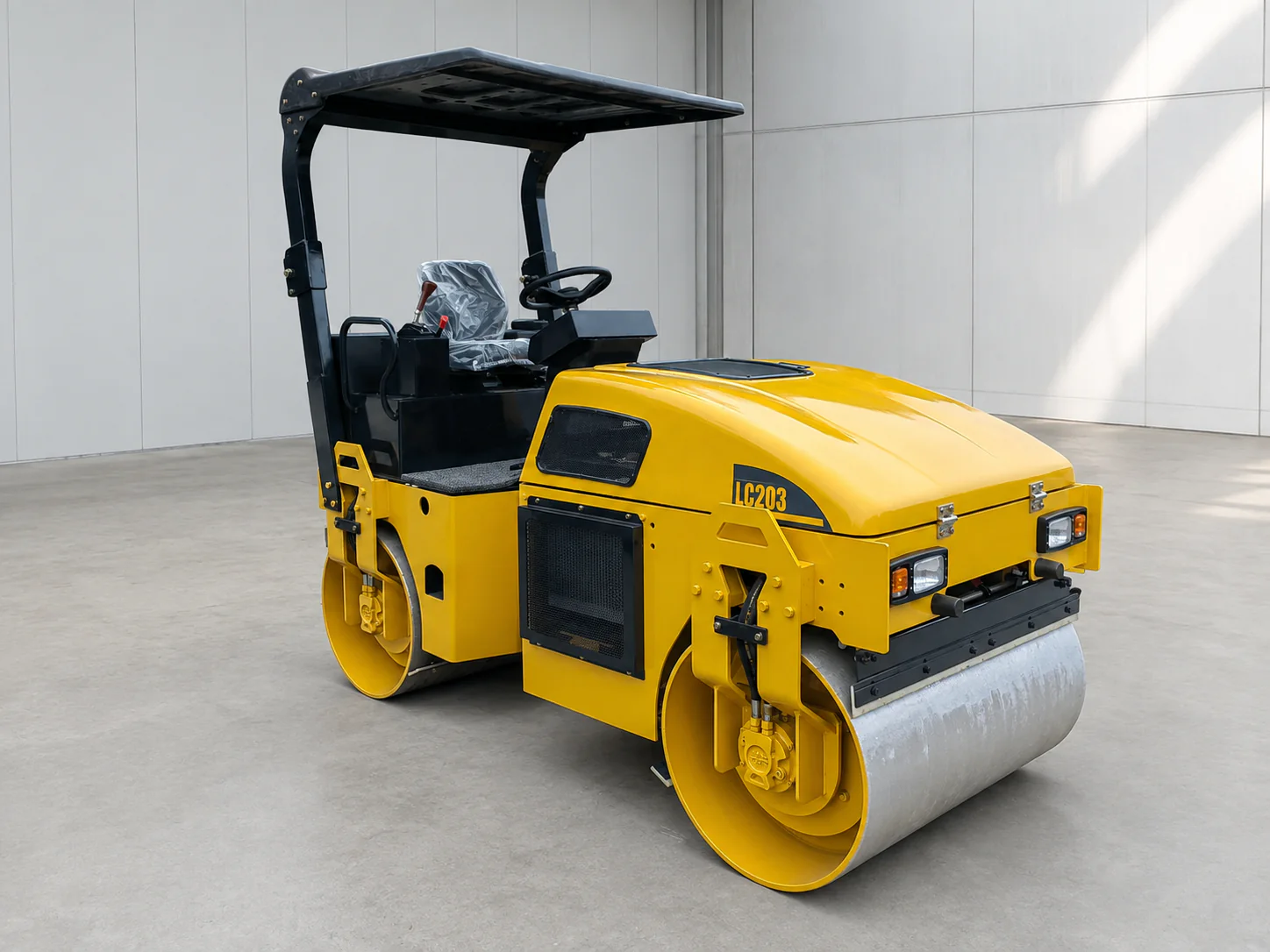
The LTC203 product page supports an initial asphalt roller comparison. If your project needs another machine class or equipment package, describe the requirement rather than assuming that this example represents the entire available range.
Check Asphalt Roller Delivery and Support
An asphalt roller quotation should identify the exact machine, supplied options, packing, documents, destination, and commercial terms. Ask for shipping dimensions and weight separately from the operating specification when preparing your transport arrangement.
Before dispatch of the asphalt roller, agree how its identity and supplied equipment will be recorded. Confirm available manuals and parts information. Keep the inspection record with the quotation so future support requests refer to the same configuration.
Asphalt Roller Buyer Questions
Which asphalt roller size should I choose?
The asphalt roller size should follow the working area and paving requirements. Compare physical access, equipment capabilities, and the crew’s plan before deciding on a weight class.
Can one asphalt roller handle every project?
No. An asphalt roller appropriate for one project may not fit another area’s access or specified process. Review each recurring application before building a fleet around one model.
What should an asphalt roller inquiry include?
Send the paving application, available width, project requirements, desired equipment, quantity, and destination. Include photographs when access or edge conditions need explanation.
Request an asphalt roller configuration review and ask LICH for a written offer that identifies the selected machine and available options.