The backhoe vs excavator decision is mainly about machine structure and the work sequence on site. A backhoe loader combines a front loading bucket and a rear excavating attachment on one carrier, while an excavator centers the machine around a rotating upper structure, boom, arm and bucket.
Neither layout is automatically better. The useful question is whether the job needs one machine to alternate between loading and digging, or a dedicated excavator with a broader digging range and a larger choice of weight classes. The comparisons below use specifications from current LICH product pages rather than estimated performance claims.
Backhoe vs excavator: the main differences
A backhoe loader works from the rear attachment when excavating and uses the front bucket for loading, carrying and site cleanup. This two-ended layout can reduce machine changes on jobs that repeatedly switch between shallow excavation and material handling.
An excavator is a dedicated digging platform. Its upper structure rotates relative to the undercarriage, allowing the operator to dig and place material around the machine without repositioning for every cycle. LICH currently publishes crawler, wheeled and mini excavator models, giving the excavator category a wider operating-weight range.
- Choose a backhoe loader when front-bucket loading and rear excavation are both regular parts of the same job.
- Choose an excavator when digging depth, reach, upper-structure rotation or a specific excavator weight class is the main requirement.
- Check transport and access using the published overall dimensions, not the machine name alone.
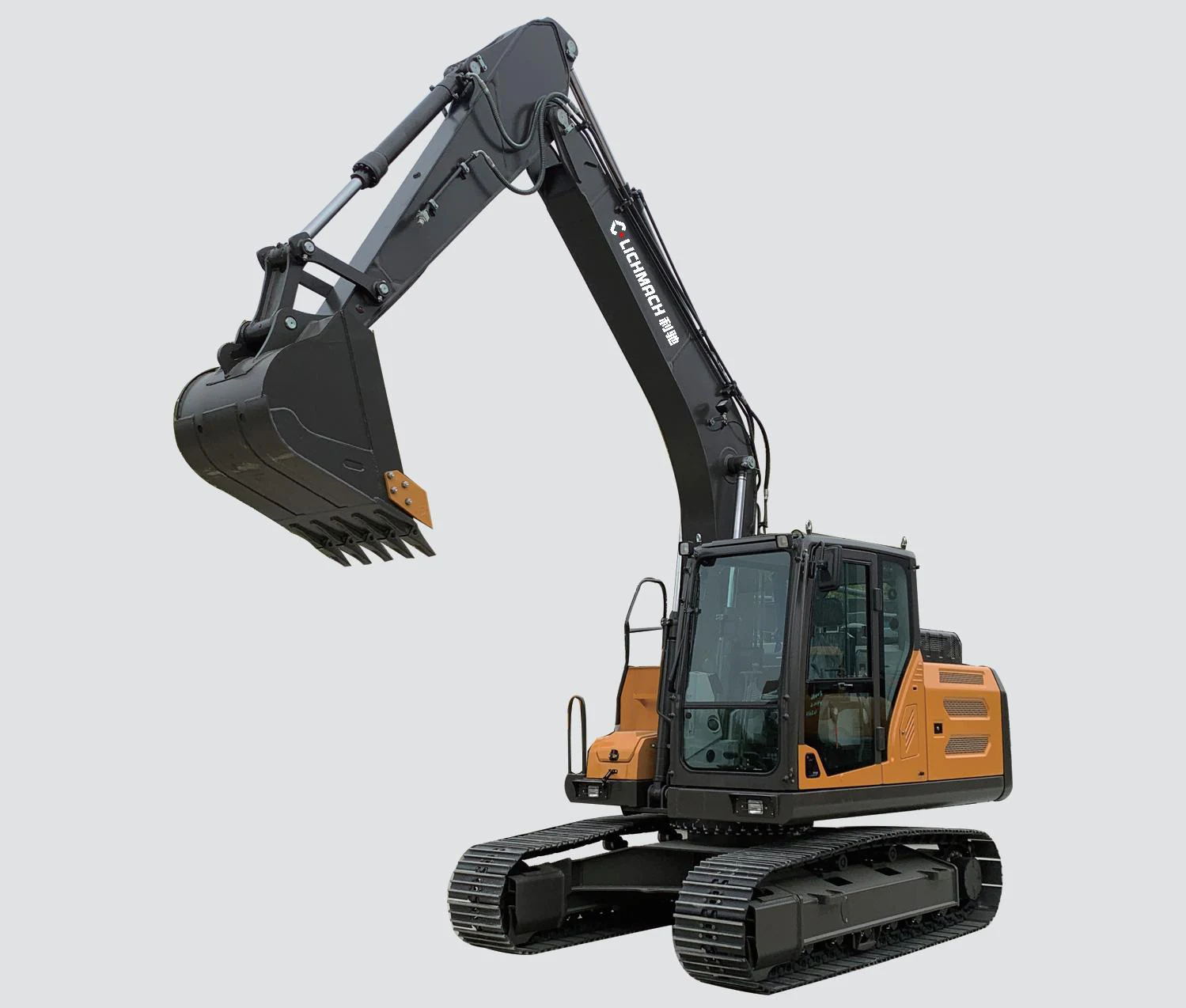
Current LICH model examples
The LC-B30 backhoe loader is listed at 7,640 kg, 75 kW at 2,200 rpm and a 4,082 mm maximum digging depth. The LC-B388 is listed at 8,200 kg, 75 kW at 2,200 rpm and a 4,085 mm maximum digging depth.
For comparison, the LC8150 crawler excavator is listed at 110 kW at 2,000 rpm with a 5,343 mm maximum digging depth. The compact LC8035 crawler excavator is listed at 18.2 kW at 2,200 rpm with a 3,208 mm maximum digging depth. These figures show why the decision should be made by model and task, not by category name alone.
| Model | Machine type | Operating weight | Rated power | Maximum digging depth |
|---|---|---|---|---|
| LC-B30 | Backhoe loader | 7,640 kg | 75 kW / 2,200 rpm | 4,082 mm |
| LC-B388 | Backhoe loader | 8,200 kg | 75 kW / 2,200 rpm | 4,085 mm |
| LC8035 | Compact crawler excavator | Not listed | 18.2 kW / 2,200 rpm | 3,208 mm |
| LC8150 | Crawler excavator | Not listed | 110 kW / 2,000 rpm | 5,343 mm |
A practical machine-selection checklist
Write down the required work before comparing models. This prevents an attractive specification from replacing the actual site requirement.
- List the main task, secondary task and expected material.
- Record required digging depth, loading height and bucket capacity.
- Measure the narrowest access point and available working space.
- Confirm ground conditions and whether a crawler or wheeled carrier is appropriate.
- Compare published model data and confirm the final configuration in writing.
Information to prepare for model matching
A useful machinery inquiry connects the model to a real work requirement. Include the primary task, material, required working range, access limits, ground conditions, attachment needs, quantity and destination. For transport-sensitive equipment, include the maximum permitted shipping dimensions or weight if these are already known.
LICH compares this information with the reviewed product files and published model data. A family name or weight class is not treated as a complete configuration. Values that are not present in the verified product material remain subject to written confirmation, and the final model, working equipment and shipment details should be recorded in the quotation documents.
Frequently asked questions
Is a backhoe the same as an excavator?
No. A backhoe loader combines a front loader bucket and rear excavating attachment. An excavator is a dedicated digging machine with a rotating upper structure.
Can a backhoe loader replace an excavator?
It can cover some digging work, but suitability depends on required depth, reach, cycle pattern and machine size. Compare model specifications for the actual job.
Which machine has more size options in the current LICH range?
The published LICH excavator range currently covers more configurations and weight classes than the backhoe-loader range.
Compare verified LICH machine data
Use the published model pages to compare dimensions, operating weight, power and working ranges. Final configuration details should be confirmed in writing for the intended job and destination.