How deep can a mini excavator dig? Between 2,060 mm and 3,208 mm across the LICH mini excavator range, which is 6.8 to 10.5 ft. A 2 t machine reaches about 2 m, a 3 t machine about 2.5 m, and a compact cab machine with a 0.12 m³ bucket a little over 3.2 m. Those are maximum figures, measured at the lowest point of the bucket’s arc. The depth you can hold with straight trench walls is less, and this guide lists both for each model.
The machines below are on the mini excavator page and in the wider excavator range.
How deep can a mini excavator dig: depth chart
| Model | Machine | Bucket | Maximum digging depth | Maximum digging radius | Maximum dumping height |
|---|---|---|---|---|---|
| LC-E20 | 2,000 kg operating weight | 0.04 m³ | 2,060 mm (6.8 ft) | 3,130 mm | 1,637 mm |
| LC-E30 | 2,800 kg operating weight | 0.07 m³ | 2,450 mm (8.0 ft) | 4,520 mm | 2,850 mm |
| LC8035 | 18.2 kW engine, enclosed cab | 0.12 m³ | 3,208 mm (10.5 ft) | 5,480 mm | 3,406 mm |
Source: LICH product catalogue, read on 13 November 2026. Feet are converted from millimetres (1 ft = 304.8 mm).
From the LC-E20 to the LC-E30 the operating weight rises 40% and the digging depth rises 19%. The LC8035 digs 31% deeper again than the LC-E30, with a bucket that holds 0.12 m³ against 0.07 m³.
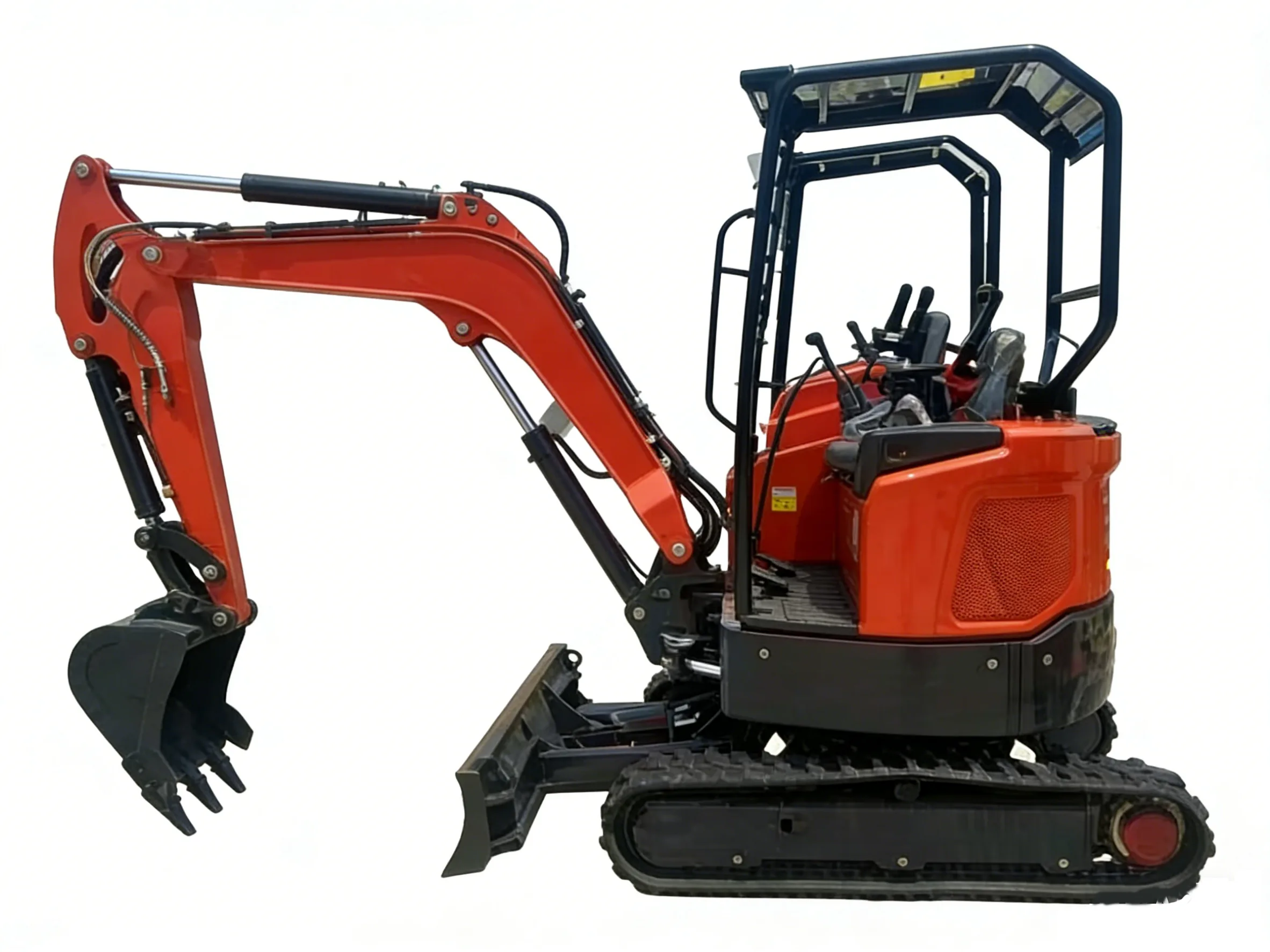
Maximum depth and straight-wall depth
A specification sheet gives two depths, and they answer different questions.
- Maximum digging depth is the lowest point the bucket teeth reach with the boom and arm fully lowered. The bucket touches that point at one spot of its arc, so the bottom of the cut is curved.
- Maximum vertical digging depth is the deepest point at which the machine can still cut a straight, vertical wall. This is the figure to use for a pipe trench or a footing with square sides.
We divided one by the other for the models that list both:
| Model | Maximum digging depth | Vertical digging depth | Difference | Share of maximum |
|---|---|---|---|---|
| LC-E30 | 2,450 mm | 1,951 mm | 499 mm | 80% |
| LC8035 | 3,208 mm | 2,957 mm | 251 mm | 92% |
| LC8065 | 4,159 mm | 3,458 mm | 701 mm | 83% |
| LC8075 | 3,898 mm | 2,968 mm | 930 mm | 76% |
| LC8090 | 4,015 mm | 3,550 mm | 465 mm | 88% |
The straight-wall depth runs from 76% to 92% of the headline figure. So when you ask how deep can a mini excavator dig for a trench, read the vertical column. Planning with the maximum figure alone can leave a job 250 to 930 mm short.
Reach matters too. The LC-E30 digs 2,450 mm deep and reaches 4,520 mm out, so at full depth the bucket works close to the machine. Set the excavator where it can travel back along the trench line as the cut advances.
When the job is deeper than 3.2 m
Past the LC8035, the next three crawler excavators in the range carry 0.21 to 0.4 m³ buckets and dig about 4 m.
| Model | Bucket | Rated power | Maximum digging depth | Maximum digging radius |
|---|---|---|---|---|
| LC8065 | 0.21 m³ | 35.9 kW | 4,159 mm (13.6 ft) | 6,162 mm |
| LC8075 | 0.28 m³ | 35.9 kW | 3,898 mm (12.8 ft) | 6,182 mm |
| LC8090 | 0.4 m³ | 53 kW | 4,015 mm (13.2 ft) | 6,540 mm |
Depth does not follow bucket size here. The LC8065 has the smallest bucket of the three and digs the deepest: 261 mm deeper than the LC8075 and 144 mm deeper than the LC8090. Boom and arm geometry set the depth. Bucket size and engine power set how much soil moves per cycle. Choose the depth first, then the bucket.
A backhoe loader reaches the same band: the LC-B388 digs 4,085 mm. The backhoe vs excavator comparison covers when each one fits, and backhoe vs mini excavator covers the small-machine choice.
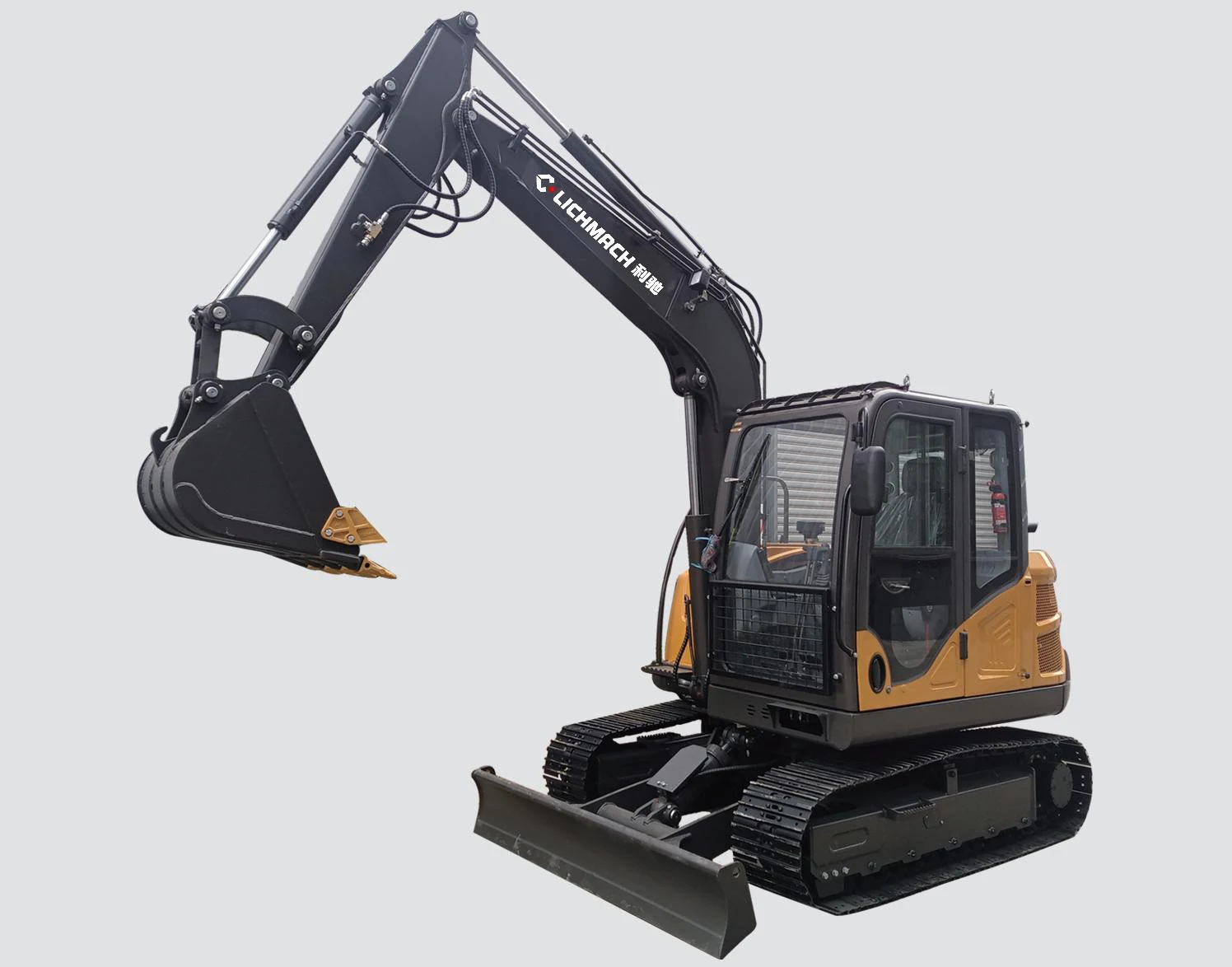
Which model for a 6, 8 or 10 ft trench
| Trench depth | In millimetres | Reaches it at maximum depth | Cuts it with vertical walls |
|---|---|---|---|
| 6 ft | 1,829 mm | LC-E20 (2,060 mm) | LC-E30 (1,951 mm) |
| 8 ft | 2,438 mm | LC-E30 (2,450 mm) | LC8035 (2,957 mm) |
| 10 ft | 3,048 mm | LC8035 (3,208 mm) | LC8065 (3,458 mm) |
Each row names the smallest model that does the job. For an 8 ft trench the LC-E30 touches 2,450 mm at the bottom of its arc, 12 mm past the target. The LC8035 holds a vertical wall to 2,957 mm and leaves 519 mm in hand for bedding under the pipe.
Add the bedding layer and any over-dig to the trench depth before you pick the model. Then check the access width and transport weight in the mini excavator weight and size chart.
Digging depth questions
How deep can a mini excavator dig in feet?
6.8 ft for the LC-E20, 8.0 ft for the LC-E30 and 10.5 ft for the LC8035.
How deep can a 2 ton mini excavator dig?
The 2,000 kg LC-E20 digs to 2,060 mm, about 6.8 ft, with a 3,130 mm maximum digging radius.
How deep can a 3 ton mini excavator dig?
The 2,800 kg LC-E30 digs to 2,450 mm, about 8.0 ft, and holds a vertical wall to 1,951 mm.
Which LICH mini excavator digs deepest?
The LC8035, at 3,208 mm. Its 0.12 m³ bucket is three times the size of the LC-E20 bucket.
Does a bigger mini excavator always dig deeper?
Among the mini models, yes: depth rises from 2,060 to 3,208 mm with size. Above them the LC8065 out-digs two machines with larger buckets, so check the depth figure on each model page.
How deep can a mini excavator dig compared with a backhoe loader?
The mini models reach 2,060 to 3,208 mm. The LC-B388 backhoe loader reaches 4,085 mm, close to the 4,159 mm of the LC8065 crawler excavator.
Get the digging depth your job needs
Send us the trench or pit depth, the wall shape, the access width and your destination port. We will match the model and send its specification sheet.
Related reading: how digging depth and weight compare across mini excavator brands.