Backhoe vs mini excavator is a choice between reach and access. A backhoe loader weighs about 8 t, digs to about 4 m and carries a loader bucket on the front. A mini excavator weighs 2 to 3 t, digs 2 to 3.2 m and fits through a gap a backhoe cannot enter. This guide sets four LICH backhoe loaders against three mini excavators on weight, width, digging depth, bucket size and loading, with the ratios worked out so the gap is clear.
Full model lists are on the backhoe loader page and the mini excavator page.
Backhoe vs mini excavator at a glance
| Feature | Backhoe loader | Mini excavator |
|---|---|---|
| Operating weight | 7,640 to 8,200 kg | 2,000 to 2,800 kg (LC-E20, LC-E30) |
| Engine power | 70 to 75 kW | 14.6 to 19 kW |
| Maximum digging depth | 3,820 to 4,085 mm | 2,060 to 3,208 mm |
| Digging bucket | 0.3 m³ | 0.04 to 0.12 m³ |
| Swing | 180° to 190° arc at the rear | Full 360° |
| Loading tool | 1.0 to 1.2 m³ front bucket, 2,500 kg lift | The digging bucket |
| Carrier | Four wheels, 22 to 38 km/h | Crawler tracks |
| Overall width | 2,268 mm (LC-B30) | 1,100 to 1,755 mm |
Source: LICH product catalogue, read on 13 November 2026.
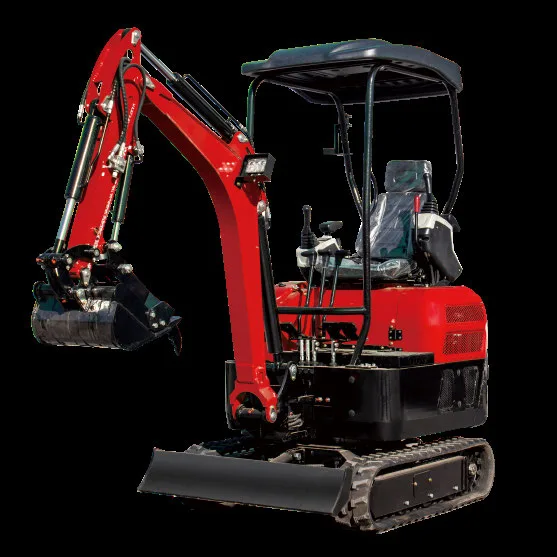
Backhoe vs mini excavator: seven models side by side
| Model | Machine | Engine power | Digging bucket | Maximum digging depth | Key figure |
|---|---|---|---|---|---|
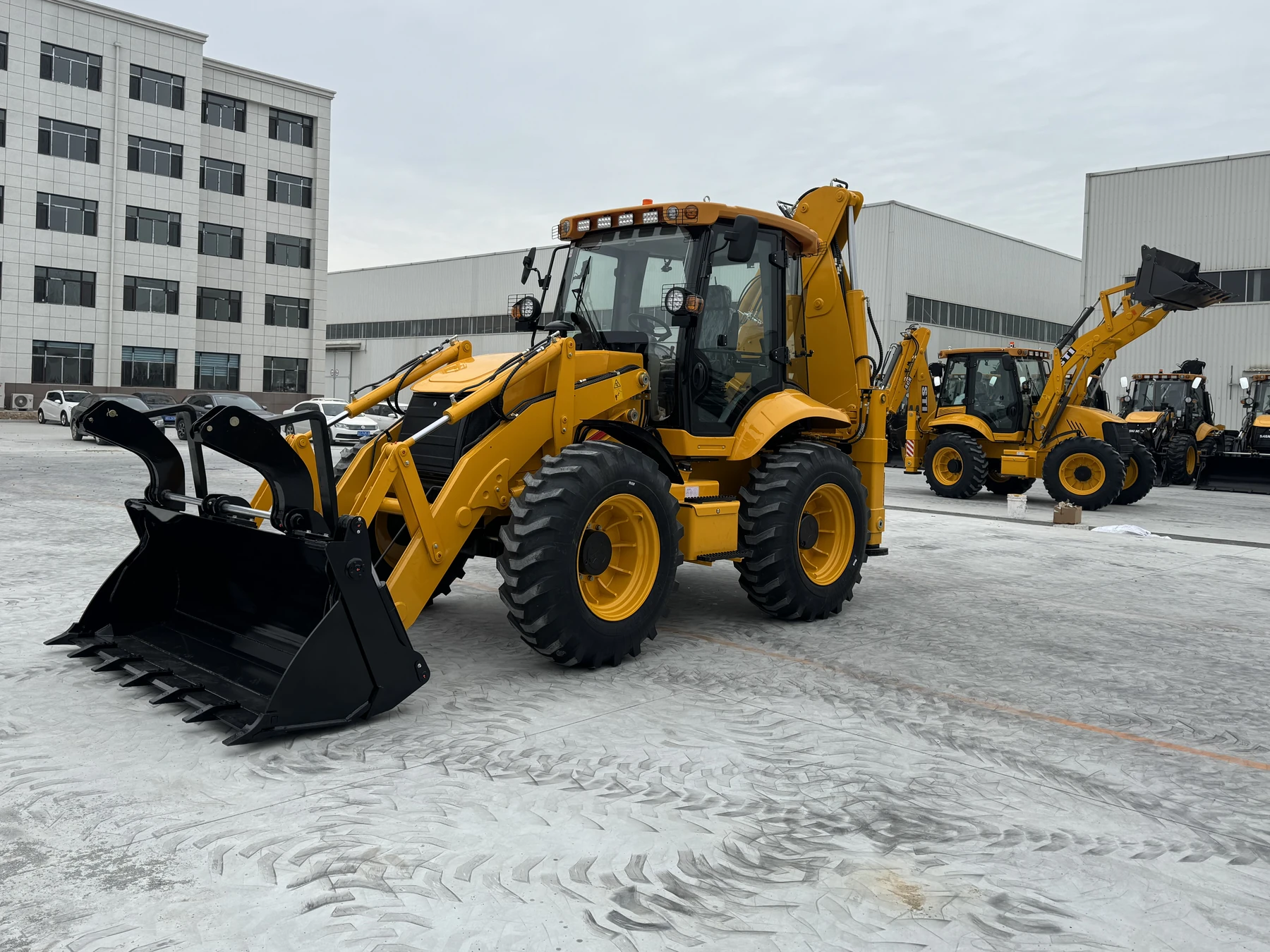
| LC-B30 | Backhoe loader | 75 kW | 0.3 m³ | 4,082 mm | 1.2 m³ front bucket, 22 km/h |
| LC-B388 | Backhoe loader | 75 kW | 0.3 m³ | 4,085 mm | 1.0 m³ front bucket, 24 km/h |
| LC-B388T | Backhoe loader, 4WD | 70 kW | 0.3 m³ | 4,085 mm | 1.0 m³ front bucket, 38 km/h |
| LC-B388H | Backhoe loader, four-wheel steer | 75 kW | 0.3 m³ | 3,820 mm | 1.2 m³ front bucket, 36 km/h |
| LC-E20 | Mini excavator | 19 kW | 0.04 m³ | 2,060 mm | 2,000 kg, 1,100 mm wide |
| LC-E30 | Mini excavator, zero tail | 14.6 kW | 0.07 m³ | 2,450 mm | 2,800 kg, 1,360 to 1,560 mm wide |
| LC8035 | Compact excavator with cab | 18.2 kW | 0.12 m³ | 3,208 mm | 1,755 mm wide, dozer blade |
The 1.5 t class LC-E15 and 1.8 t class LC-E17 sit below the LC-E20 for the tightest sites.
What the ratios show
We divided the LC-B388 backhoe loader figures by the mini excavator figures. Five results decide most backhoe vs mini excavator choices.
- Weight: 2.9 to 4.1 times. The LC-B388 weighs 8,200 kg, against 2,800 kg for the LC-E30 and 2,000 kg for the LC-E20. A mini excavator is moved on a trailer. A backhoe loader drives itself at 22 to 38 km/h.
- Digging depth: 877 mm to 2,025 mm more. The backhoe reaches 4,085 mm. The deepest mini model, the LC8035, reaches 3,208 mm, and the LC-E20 reaches 2,060 mm.
- Bucket: 2.5 to 7.5 times. A 0.3 m³ backhoe bucket holds as much as two and a half LC8035 buckets or seven and a half LC-E20 buckets, so a wide trench is finished in fewer cycles.
- Digging force: 67% more than the LC8035. 50 kN at the backhoe bucket against 30 kN, and 21 kN on the LC-E30. Hard or stony ground favours the heavier machine.
- Width: about half. The LC-E20 is 1,100 mm wide and the LC-B30 is 2,268 mm. The LC-E30 narrows its tracks to 1,360 mm and swings its rear within 700 mm, so it works against a wall.
Loading is where the two differ most. The front bucket of a backhoe loader holds 1.0 to 1.2 m³ and lifts 2,500 kg. By volume, one 1.0 m³ load equals about eight buckets from the LC8035 or fourteen from the LC-E30. A mini excavator loads with its digging bucket: the LC-E30 dumps at 2,850 mm and the LC8035 at 3,406 mm, and the 360° swing lets it dig in front and dump to the side without moving. For daily truck loading the backhoe loader is the faster tool.
Which one fits your job
Hold the backhoe vs mini excavator figures against your own site.
Choose a mini excavator when:
- The way in is narrower than 2.3 m. The mini models are 1,100 to 1,755 mm wide.
- Trenches stay within 2 to 3.2 m: service lines, drains, small footings.
- The machine has to dig beside a wall or inside a yard. The LC-E30 has a 700 mm rear swing radius.
- You move the machine by trailer between short jobs. The LC-E20 folds to a 2,597 mm transport length.
- Digging is the only task and a 0.04 to 0.12 m³ bucket keeps up.
Choose a backhoe loader when:
- Trenches run from 3.2 m to about 4 m deep.
- The same crew digs, backfills and loads trucks, so the 1.0 to 1.2 m³ front bucket works every day.
- Jobs are spread along a road and the machine drives between them.
- The ground is hard enough to need 46.5 to 50 kN at the bucket.
The two also work as a pair: the backhoe loader for open road work, the mini excavator for the places it cannot enter. For larger diggers, read backhoe vs excavator. For depth planning, see how deep can a mini excavator dig.
Backhoe vs mini excavator questions
Which digs deeper, a backhoe or a mini excavator?
The backhoe loader. The LC-B388 digs 4,085 mm, and the mini excavators dig 2,060 to 3,208 mm.
Can a mini excavator replace a backhoe?
For digging in tight spaces, yes. For loading, the backhoe has a 1.0 to 1.2 m³ front bucket with a 2,500 kg lift, and a mini excavator loads with a 0.04 to 0.12 m³ digging bucket.
Which is easier to transport?
The mini excavator, at 2,000 to 2,800 kg. A backhoe loader weighs 7,640 to 8,200 kg and travels on its own wheels at up to 38 km/h.
Which is better for a small yard?
A mini excavator. The LC-E20 is 1,100 mm wide and turns its upper body in a full circle, so it digs and dumps without repositioning.
What is the main difference between a backhoe and a mini excavator?
A backhoe loader is a wheeled tractor with a loader in front and a digging arm behind that swings 180° to 190°. A mini excavator is a small tracked machine with one digging arm that swings 360°.
Get the right machine for your site
Send us the access width, the deepest trench, how much loading the job needs and your destination port. We will recommend a backhoe loader, a mini excavator or both, and send the specification sheets.
Related reading: six mini excavator brands and the figures to ask each one for.